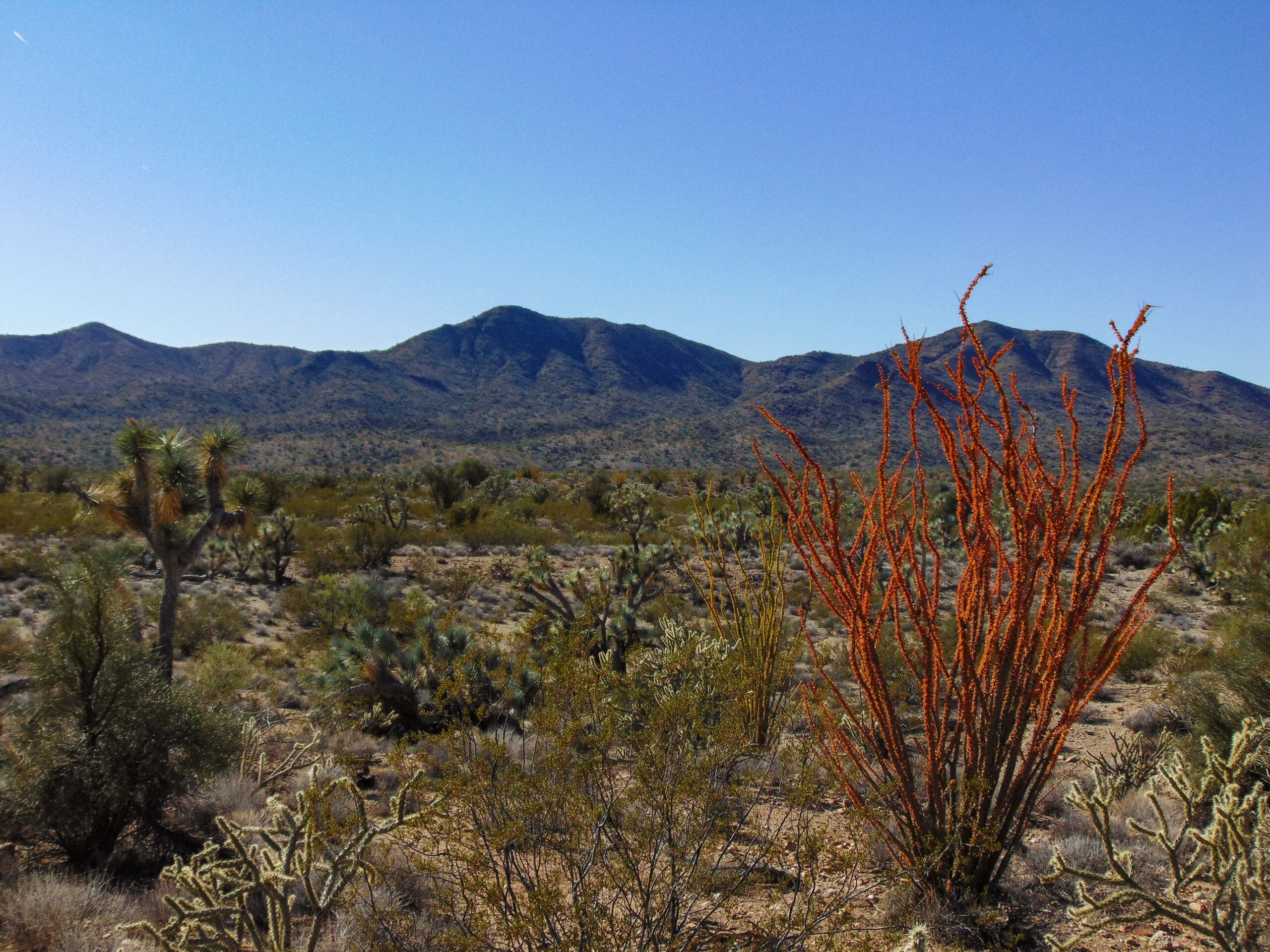



In the quiet, unincorporated communities of Arizona’s West Valley—places like Circle City, Wittmann, and Morristown, where families have carved out lives of rugged independence—the City of Surprise is waging a relentless assault. Armed with the blunt force of eminent domain, this Phoenix suburb is seizing water rights and utilities from beyond its borders, claiming authority it has no right to wield. This isn’t about serving the public good; it’s a calculated land-and-water grab to fuel sprawling master-planned communities and industrial megaprojects like the BNSF rail yard, all at the expense of rural Arizona’s very existence. The corruption lies not just in the act of taking but in the audacity of a city assuming dominion over assets far outside its jurisdiction, obliterating small towns to pave the way for urban empire-building.
Surprise’s actions—epitomized by its 2025 seizure of the Circle City Water Company (CCWC)—reveal a pattern of predatory governance. By exploiting Arizona’s lax eminent domain laws, the city is amassing a water portfolio to satisfy developers’ thirst for growth, leaving rural residents with disrupted services, inflated costs, and the looming threat of annexation that will erase their way of life. This report, grounded in court records, state documents, and community outcry, exposes the raw abuse of power driving Surprise’s agenda and demands accountability for a system that sacrifices Arizona’s rural heart for suburban greed.
A Jurisdiction Without Limits: Surprise’s Extraterritorial Overreach
At the core of this scandal is Surprise’s brazen claim to authority over assets in communities it doesn’t govern. Arizona law, specifically A.R.S. § 9-511, allows cities to use eminent domain “within or without its corporate limits” for water systems, a provision cemented by the 1972 case Citizens Utilities Water Co. v. Superior Court. 0 A.R.S. § 9-516 further declares it “public policy” to seize utilities like water companies, no matter where they sit. 1 These statutes, unchained from any meaningful geographic constraint, let Surprise target the Hassayampa Basin’s unregulated groundwater and Central Arizona Project (CAP) allocations held by rural providers, all without a vote from those affected.
The pivotal enabler came in 2019, when the Arizona Supreme Court’s ruling in City of Surprise v. Arizona Corporation Commission (246 Ariz. 206) stripped away a critical safeguard. The court declared that the Arizona Corporation Commission (ACC), which regulates utilities, has no authority over eminent domain takings, leaving cities free to act without oversight. 2 This decision handed Surprise a blank check to plunder water assets in places like Circle City—15 miles outside its limits—where residents have no say in city elections or policies. It’s a power grab that mocks the principle of local governance, treating rural communities as colonial outposts to be stripped for resources.
The Circle City Water Company Seizure: A Case Study in Exploitation
The most glaring example of this abuse is Surprise’s seven-year campaign to seize the Circle City Water Company, a small utility serving roughly 250 homes in unincorporated Circle City. CCWC held 3,932 acre-feet of senior-priority CAP water, a jackpot for a city eyeing urban expansion but barely used by Circle City’s groundwater-reliant residents. 3 The saga began in October 2017 with a $10-30 million purchase offer, but when negotiations stalled—partly due to a 2005 developer contract with Lake Pleasant 5000 LLC—Surprise turned to eminent domain. 4
In March 2019, the city filed for condemnation in Maricopa County Superior Court (Case No. CV2019-001234), demanding CCWC’s wells, infrastructure, service area, and CAP rights. 4 The 2019 Supreme Court ruling cleared the ACC’s interference, and by 2022, the court granted immediate possession, finalized in September 2025 for $15 million. 2 3 4 CAP reassigned the rights in December 2024, boosting Surprise’s allocation to 14,181 acre-feet annually, a windfall for recharging aquifers to greenlight developments like Asante North (3,000 homes). 3 5
The city’s justification? A vague “public necessity” tied to the Arizona Department of Water Resources’ (ADWR) 100-year Assured Water Supply rules, claiming the water ensures growth for a projected 500,000+ population by 2040. 5 But Circle City residents got no such security: pre-takeover outages plagued the system (twice weekly in 2023), and post-acquisition smart meters were installed without notice, raising fears of surveillance and billing hikes. 3 This wasn’t about helping Circle City—it was about siphoning its water to fuel Surprise’s suburban dreams, leaving a rural community high and dry.
The 2040 General Plan: A Roadmap for Rural Erasure
Surprise’s actions are no accident; they’re codified in its 2040 General Plan, ratified in August 2024, which envisions a “One Surprise” swallowing unincorporated areas like Wittmann, Morristown, and Chaparral Rancheros. 5 The plan’s Water Acquisition Policy (amended 2018) explicitly calls for “aggressively seeking” groundwater and CAP rights from utilities in its 20-mile sphere of influence (SOI), using eminent domain as needed. 6 It demands extinguishing grandfathered groundwater rights in these areas to secure surplus credits for zoning approvals, ensuring water for projects like the $3.2 billion BNSF Logistics Park and Surprise 295. 5 6
This isn’t planning—it’s predation. The SOI places rural communities under de facto city influence without their consent, setting the stage for annexations that force utilities into Surprise’s system. In Wittmann, 640 acres were annexed in March 2025, and 1,200 more rezoned from rural to commercial in July, threatening West End Water Company’s modest 157 acre-feet CAP allocation. 5 7 Morristown’s groundwater-only well (ADEQ ID 18698, drilled 1975) faces similar risks as the Hassayampa corridor is eyed for development. 8 Chaparral Water Company, serving Wittmann’s outskirts, is vulnerable to the proposed White Tank Freeway, which could trigger infrastructure takings. 9
The Corruption at the Core: Prioritizing Developers Over Communities
Surprise’s claim of “public necessity” is a thinly veiled front for developer interests. The 2040 Plan’s growth targets—thousands of homes and industrial hubs—align with contributions from firms like D.R. Horton, which reportedly funneled $450,000 into local campaigns between 2023 and 2024. 10 The CCWC case exposed this nexus: the city sidestepped a 2005 developer contract with Lake Pleasant 5000 LLC, leaving the project stalled while pocketing the water for other MPCs. 4 This isn’t about serving Circle City’s 250 homes—it’s about banking water for 500,000 future residents in high-density subdivisions.
The human toll is stark. Circle City residents endured outages and $1,500 hookup fees pre-takeover, with smart meters now raising privacy concerns. 3 Wittmann’s 1,800-signature incorporation drive and Morristown’s isolation reflect a desperate fight to preserve autonomy. 10 Petitions like “Keep Us Rural” (2,500 signatures) decry taxation and zoning without representation, as Surprise’s annexations impose city rules on non-voters. 10 Environmentally, the Sonoran Desert’s rare cacti and aquifers are sacrificed for sprawl, with recharged CAP water enabling the very growth that strains groundwater. 5
A Call to End the Abuse
This is government corruption dressed up as progress. Surprise’s extraterritorial water grabs—enabled by a 2019 ruling that gutted ACC oversight—mock the principle that local governments serve their constituents, not distant developers. Arizona’s laws, untethered from jurisdictional limits, let cities like Surprise act as feudal lords, plundering resources from communities that can’t vote them out. The constitutional promise of “public use” is hollow when it means paving over rural towns for suburban profit.
Reform is urgent: A.R.S. §§ 9-511 and 9-516 must be amended to bar extraterritorial takings, and Proposition 207’s protections strengthened to halt water grabs disguised as “security.” Rural residents deserve a voice—veto power over annexations or direct representation. Until then, Surprise’s actions stand as a chilling warning: no small community is safe when a city’s ambition knows no bounds.