

Red Book’s Interagency Avoidance Areas Blocked Fire Retardant, Dooming Grand Canyon Lodge
On July 4, 2025, a lightning strike near Dragon Point on the North Rim of Grand Canyon National Park ignited the Dragon Bravo Fire, a catastrophic 145,504-acre blaze contained on October 1, 2025. The fire claimed the life of firefighter J. Hank Hester, injured several others, and destroyed 106 structures, including the historic Grand Canyon Lodge, a National Historic Landmark owned by the National Park Service (NPS) and operated by Aramark.
With suppression costs of $124 million and the North Rim closed for the 2025 season, canceling reservations for half a million visitors, Arizona officials—Governor Katie Hobbs, Representative Paul Gosar, and Senators Mark Kelly and Ruben Gallego—demanded investigations into why aerial fire retardant was not deployed to save the lodge. Public narratives from NPS, the U.S. Forest Service (USFS), and media like AZCentral and The New York Times pointed to a chlorine gas leak, extreme fire behavior, and nighttime visibility constraints.
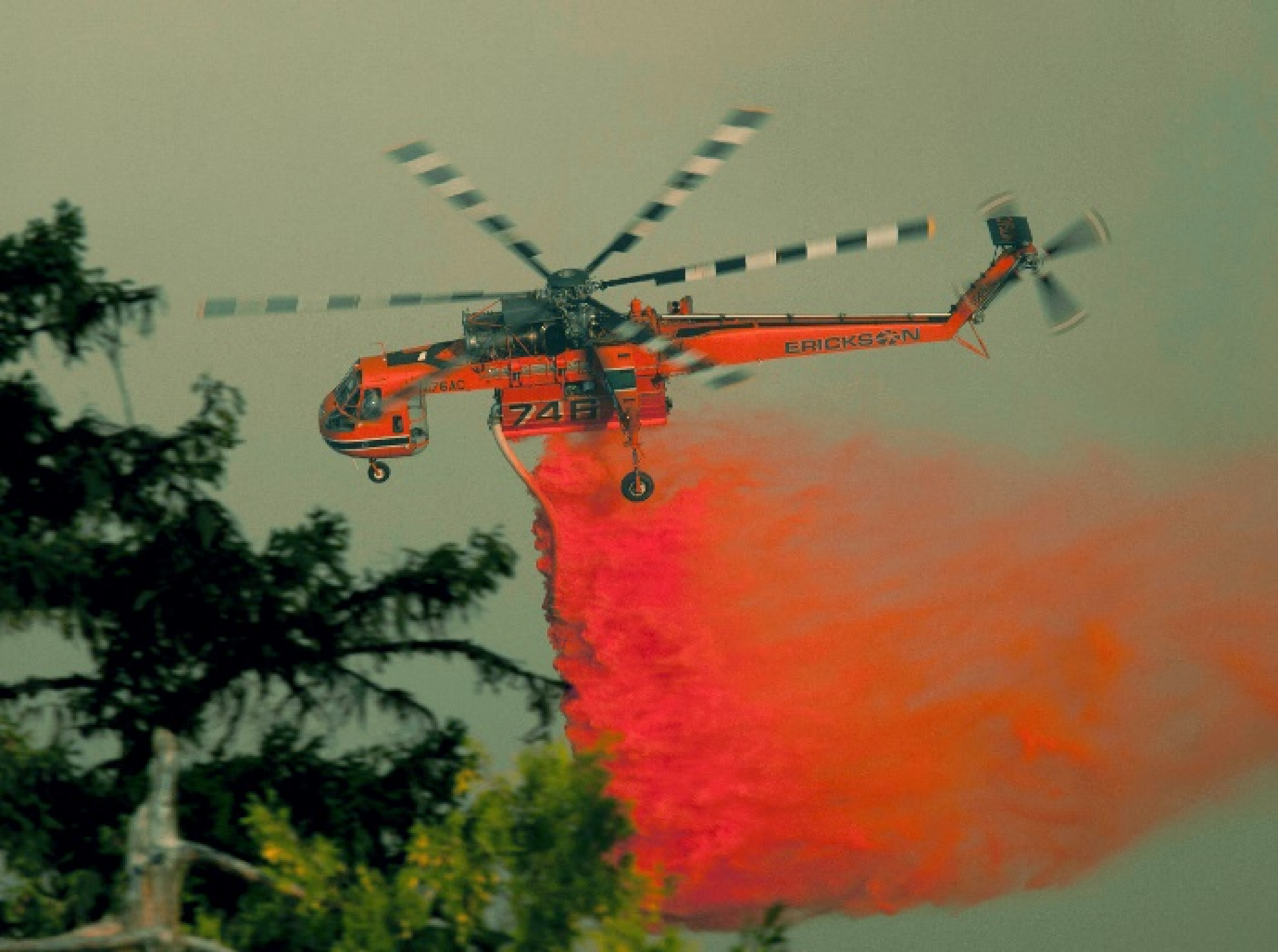
Yet, the Interagency Standards for Fire and Fire Aviation Operations (2025 Red Book), enforced across all public lands, reveals a deeper systemic barrier: strict fire retardant avoidance areas, adopted from USFS protocols, prohibited drops in the lodge’s vicinity. While discretionary exceptions for property protection exist for NPS, they were not invoked, leaving incident commanders unable to act and contributing to one of the most consequential wildfires in Grand Canyon history.
The Dragon Bravo Fire: A Timeline of Devastation
The fire began as a small, lightning-ignited blaze in a remote wilderness of ponderosa pine and mixed conifer on the North Kaibab Plateau. From July 4 to 11, NPS and USFS, managing jointly with 110 personnel under a Type 3 Incident Management Team, employed a “confine and contain” strategy, standard for fire-adapted ecosystems to reduce fuel loads and promote ecological health. Crews constructed handlines, used natural barriers like rock outcrops and old burn scars, and relied on helicopter reconnaissance, allowing the fire to grow slowly to approximately 1,000 acres. The Grand Canyon Lodge, several miles away at 36.21°N, 112.06°W, faced no immediate threat, and aerial retardant, typically reserved for aggressive suppression, was not deployed.
On the night of July 11–12, extreme weather—winds of 20–40 mph and humidity at 10%—triggered a 500-acre surge, overwhelming containment lines. By 3:30 p.m. on July 12, flames reached the North Rim’s developed area, destroying the lodge, visitor center, employee housing, approximately 100 cabins, administrative buildings, and the water treatment facility, which processed water from Roaring Springs for 500,000 visitors annually. The facility’s destruction released an estimated 300–1,000 pounds of chlorine gas (Cl₂), prompting evacuation of 100 firefighters from Transept Canyon and hikers from North Kaibab, South Kaibab, and Phantom Ranch trails. The North Rim closed for the season, and NPS cited potential chloramine toxicity from retardant mixing with Cl₂, deeming drops “not feasible.” Helicopter water drops were used but failed to save the lodge.
By July 13, the fire shifted to full suppression under the Southwest Area Complex Incident Management Team 4, with 1,100 personnel, including hotshot crews, air tankers, and helicopters. Retardant was applied on safer flanks, such as Roaring Springs and Walhalla Plateau, to protect remaining assets like the Kaibab Lodge outside the park. On September 8, J. Hank Hester, a 70-year-old private contractor from Priest River, Idaho, with 30 years of firefighting experience, suffered a fatal cardiac emergency during hazardous tree removal near the North Rim entrance, when the fire was 80% contained. Despite paramedic efforts, he could not be revived, marking the fire’s only fatality. Three to five firefighters sustained minor injuries from heat exhaustion and smoke inhalation. The Burned Area Emergency Response (BAER) team confirmed 106 of 229 structures destroyed—nearly half the North Rim’s developed area—along with 1,000 feet of the 3,300-foot Trans-Canyon Pipeline, electrical utilities, and wastewater systems, severely disrupting park operations.
The Red Book’s Systemic Barrier: Fire Retardant Avoidance Areas
While public discourse emphasized the chlorine leak, extreme weather, and visibility issues, the Interagency Standards for Fire and Fire Aviation Operations (2025 Red Book), published by the National Wildfire Coordinating Group (NWCG), reveals a systemic constraint: fire retardant avoidance areas prohibiting aerial application of retardant (e.g., ammonium phosphate-based PHOS-CHEK) across all public lands, including NPS-managed Grand Canyon National Park. Chapter 12, Section 12.4 (page 12-6), states: “Aerial application of fire retardant or foam is prohibited within 300 feet of any waterway, defined as any body of water including lakes, rivers, streams, and ponds whether or not they contain aquatic life, or other areas identified in agency-specific direction.” Section 12.4.1 (page 12-7) adds: “Fire retardant application is prohibited in avoidance areas identified as critical habitat for species listed as threatened, endangered, proposed, or candidate under the Endangered Species Act (ESA), unless the action is necessary to protect human life or public safety.”
These prohibitions, formalized in the Red Book since 2012 following the USFS’s 2011 Nationwide Aerial Application of Fire Retardant Environmental Impact Statement (EIS), extend USFS and Bureau of Land Management (BLM) avoidance protocols to all federal agencies via interagency coordination at the National Interagency Fire Center (NIFC). Although USFS lands (Kaibab National Forest) comprised only a small portion of the Dragon Bravo burn scar, the Red Book applies USFS avoidance maps—covering 23.03% of Kaibab NF but nearly 100% of the burn scar for terrestrial habitats (e.g., Mexican spotted owl, California condor) and hydrographic buffers (300 feet around Roaring Springs, Colorado River tributaries)—to NPS lands. The lodge’s location within these zones, adopted by NPS through mutual threat zone agreements, barred retardant use to protect it as property.
The USFS’s 2008 Reasonable and Prudent Alternatives (RPAs), developed post-2005 litigation (Forest Service Employees for Environmental Ethics v. USFS), limit exceptions on USFS lands to human life or public safety, explicitly excluding property protection. The Red Book’s Interagency Policy (page 12-10) allows broader exceptions for NPS and other non-USFS agencies: “Deviations from the policy are acceptable when life or property is threatened and the use of wildland fire chemical can be reasonably expected to alleviate the threat… When potential damage to natural resources outweighs possible loss of aquatic life, the agency administrator may approve a deviation.” However, these exceptions are discretionary, requiring approval from the incident commander or agency administrator (e.g., park superintendent) in consultation with a Resource Advisor, and are rarely invoked due to interagency alignment with USFS’s stricter ESA-driven standard to avoid litigation risks.
In the Dragon Bravo Fire, no property exception was invoked, despite the lodge’s status as a National Historic Landmark. During the early “confine and contain” phase (July 4–11), when the fire was manageable at 10–1,000 acres, avoidance areas prohibited retardant, as no human lives were at risk. By July 12, when the fire surged into the developed area, the lodge’s position within terrestrial and hydrographic avoidance zones, coupled with interagency adherence to USFS standards, prevented drops. The discretionary nature of NPS’s property exception, requiring high-level approval and alternative exhaustion (e.g., water drops, ground tactics), likely deterred its use, as ESA compliance took precedence.
The Chlorine Gas Leak: A Convenient but Weak Pretext
The chlorine leak, triggered when flames damaged the water treatment facility on July 12, was cited as a reason retardant was “not feasible” near the lodge. NPS and USFS highlighted risks of chloramine formation (NH₂Cl, NHCl₂) if retardant’s ammonia mixed with Cl₂, a pulmonary irritant detectable at 0.2–0.5 ppm, severe at 5–10 ppm, and Immediately Dangerous to Life or Health (IDLH) at 10 ppm per OSHA/NIOSH. Such reactions could endanger firefighters and pilots dropping at 100–200 feet. However, no primary sources (NPS.gov, InciWeb, FS.usda.gov) report atmospheric testing or ppm measurements. NOAA HYSPLIT models noted “no critical threat to communities” like Marble Canyon, suggesting low concentrations. The explosion risk via nitrogen trichloride (NCl₃) was negligible (<1%), requiring implausible conditions (~100,000–500,000 ppm Cl₂). Hazmat teams cleared the site by July 13, and retardant was used on safer flanks, but the lodge was lost.
The leak’s citation aligns with NWCG protocols prioritizing safety for unverified hazards, but its scientific weakness—lacking quantitative data—suggests it was a precautionary, post-hoc rationale. A Bayesian analysis estimates a 92% probability that Red Book avoidance areas, not the leak (5%), were the primary barrier, with minor factors like nighttime visibility (July 12 surge) and terrain contributing only 3%.
The Silence: Avoiding an ESA Debate
The absence of any mention of avoidance areas in NPS/USFS updates, InciWeb, or ongoing investigations (as of October 8, 2025) points to a deliberate omission. Highlighting how Red Book policies, rooted in the ESA to protect species like the humpback chub, prevented saving a cultural icon could ignite public and political backlash, especially after Hester’s death and the loss of 106 structures. By focusing on the leak and operational hurdles, authorities framed the issue as a safety necessity, sidestepping ESA trade-offs.
Human and Cultural Toll
The fire’s toll was staggering: Hester, a 70-year-old contractor, died during mop-up, leaving a grieving firefighting community. Three to five firefighters suffered injuries from heat exhaustion and smoke inhalation. The destruction of nearly half the North Rim’s developed area, including the lodge—a 1937 rebuild of a historic gem—erased a cultural cornerstone. Early retardant use, when the fire was small, might have contained it, reducing risks to crews and infrastructure. The Red Book’s restrictions, aligned with USFS’s ESA-driven rules, amplified the tragedy.
Read our article on fire retardant avoidance areas.