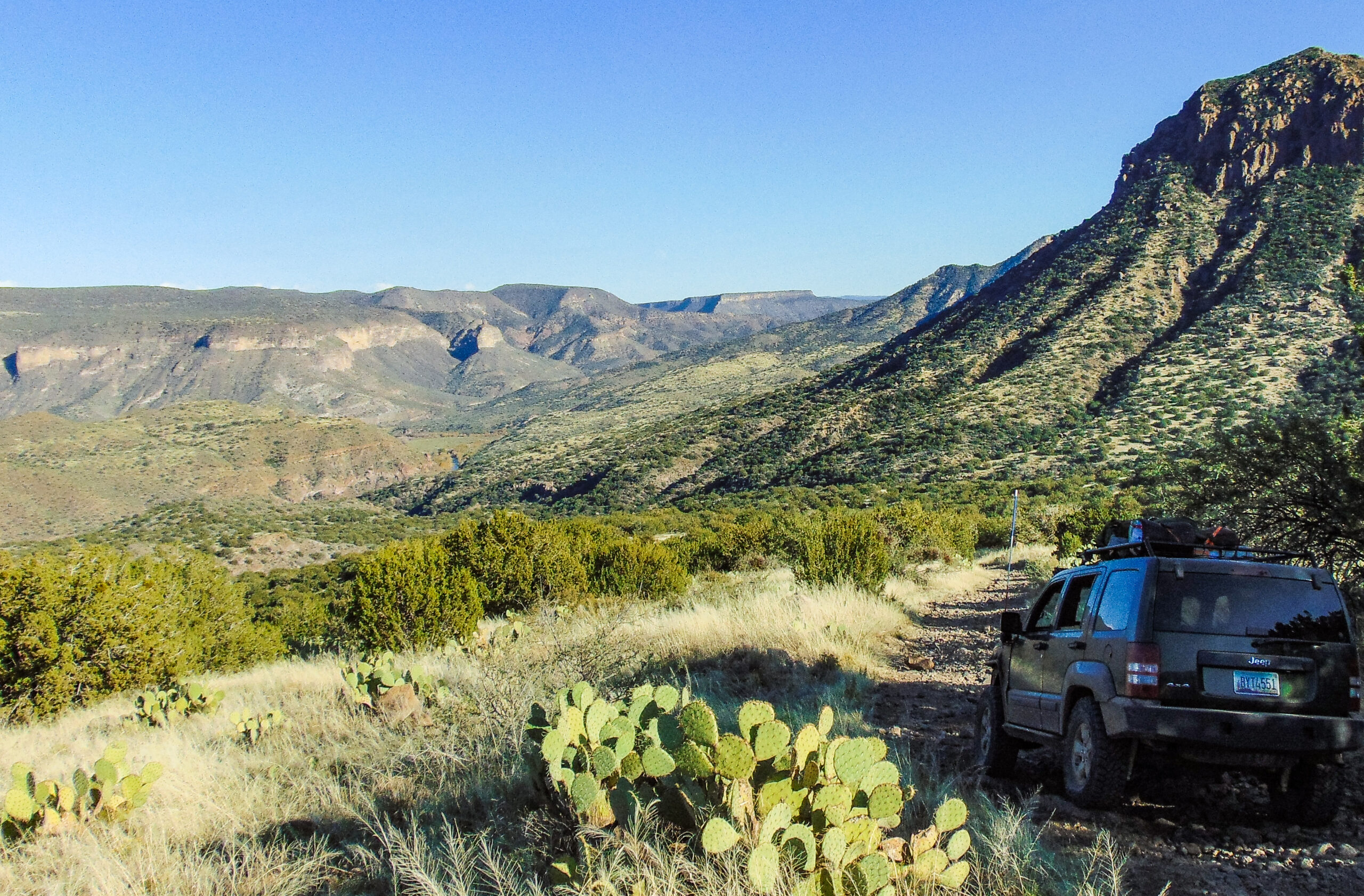

The primary advocacy objective of Arizona Backcountry Explorers and AZBackroads.com has finally been achieved.
Since the beginning of this organization, our central focus has been Executive Order 11644—the federal directive that agencies have relied upon to conduct travel management planning on public lands. Over the past several decades, that process has resulted in the closure of nearly 500,000 miles of roads across the United States, including approximately 60,000 miles in Arizona alone.
For years, Arizona Backcountry Explorers has maintained that Executive Order 11644 was the foundational policy driving road closures, road designations, OHV permit areas, and broader travel management decisions throughout the federal public land system. We consistently argued that the order was being applied far beyond its original purpose and was being used to regulate ordinary motorized access, including roads protected under RS2477, rather than being limited to off-road vehicles as originally intended.
Beginning in 2018, Arizona Backcountry Explorers dedicated substantial time and resources to researching, documenting, and educating the public about Executive Order 11644. At the time, few organizations were discussing the order itself or examining its role in federal travel management planning. While most advocacy efforts focused on participating in travel management processes or mitigating individual closures, we focused on the underlying authority being used to justify those actions.
Over time, this research became a significant part of the broader public land access discussion. Numerous clubs, organizations, elected officials, attorneys, and individuals from across the country contacted us for information regarding Executive Order 11644, RS2477, and strategies for addressing road closures. What began as a relatively obscure legal and policy argument gradually became a topic of discussion among a much larger segment of the public land access community.
Throughout this process, Arizona Backcountry Explorers often found itself at odds with the prevailing approach within the off-road community. Many organizations believed that travel management planning itself was necessary to preserve access and focused their efforts on participating in that system. Our position differed. We maintained that meaningful long-term reform required addressing the legal and policy foundations of the process rather than simply negotiating individual outcomes.
That position was not always popular.
When these issues were first raised publicly, there was significant resistance from portions of the off-road community. Some organizations viewed our position as unrealistic or disruptive, while others believed that challenging Executive Order 11644 directly was impossible. Despite that opposition, we continued to argue that public land advocates needed to become familiar with RS2477, constitutional property rights, and the broader legal framework governing public roads.
For years, we warned that we would be victorious and roads would become a state and local issue and that advocates needed to prepare for a future in which RS2477 rights would play a central role in access discussions. We encouraged organizations to rethink traditional advocacy strategies and focus on fundamental legal principles rather than relying solely on environmental or recreational arguments.
To support that effort, we developed rs2477road.com as a comprehensive resource dedicated to RS2477 history, law, and road rights. The goal was to provide advocates, elected officials, and members of the public with the information necessary to understand and defend public access based on established legal principles.
The strategy we promoted focused on addressing the root cause of widespread closures rather than the symptoms. Over time, similar concepts gained support among other access advocates, including the Blueribbon Coalition and policymakers who pursued related reforms. What was once considered a fringe position gradually became the primary target of public land access advocates seeking a permanent solution to the ongoing decades long motorized access battle. We went straight to the top and we won.
Throughout this effort, Arizona Backcountry Explorers engaged with a wide range of decision-makers and stakeholders, including attorneys, judges, members of Congress, state legislators, county commissioners, city officials, non-governmental organizations, executive branch officials, and representatives connected to the Office of the President of the United States.
On June 2, 2026, President Trump issued Executive Order 14408, permanently rescinding Executive Order 11644, issued on February 8, 1972, concerning the Use of Off-Road Vehicles on the Public Lands, and Executive Order 11989, issued on May 24, 1977, concerning Off-Road Vehicles on Public Lands. Thanks to Blueribbon coalition for bringing this issue directly to Washington DC.
For Arizona Backcountry Explorers, this represents a historic milestone
Whether one agrees with our conclusions or not, we have consistently argued since 2018 that Executive Order 11644 was the foundational policy enabling federal travel management planning and many of the road closures that followed. The rescission of that order marks a significant shift in public land policy and validates the importance of examining the underlying legal authorities that govern land use rights.
With Executive Order 11644 now rescinded, RS2477 is likely to become increasingly important in future access discussions. Much of the information, research, and documentation compiled over the past several years will become even more relevant as agencies, states, counties, and public land users navigate the implications of this policy change.
This victory did not happen overnight. It represents years of research, advocacy, public education, and persistence in the face of significant opposition. More importantly, it opens the door to a renewed discussion about public roads, public access, constitutional property rights, and the proper limits of federal authority over the public domain.
The Next Step for Public Land
There is still work that needs to be done. By no means should anyone become comfortable with this preferred outcome.
Federal agencies responsible for managing public lands must now revise regulations that were implemented under Executive Order 11644. The Bureau of Land Management, the United States Forest Service, the National Park Service, and the United States Bureau of Reclamation must roll back regulations to a framework consistent with the laws and regulations that existed prior to 1972 and that directly recognized Section 8 of the Mining Act of 1866, commonly known as RS2477. Doing so would effectively dismantle more than 50 years of policy built upon Executive Order 11644 and its related regulatory framework.
If this does not become a top priority within the next two years, a future administration could easily reverse this executive order and instantly re-enable the travel management process.
We must also establish the foundational principle that no existing law or executive order explicitly grants any federal agency authority to govern motorized roads on federal lands. Therefore, when federal agencies attempt to continue closing roads under the Endangered Species Act or other federal statutes, it must be vigorously asserted that those laws do not expressly provide such authority. None of those laws specifically address the governance of public roads.
A Possible Loophole in Executive Order 14408
Executive Order 14408 may still leave a potential loophole that could allow federal agencies to continue travel management planning under the authority of other federal laws that do not specifically address roads.
For decades, federal land management agencies conducted travel management planning under the authority of Executive Order 11644 in conjunction with several federal statutes that are also referenced in Executive Order 14408.
The new executive order references the National Historic Preservation Act, the Endangered Species Act, the National Environmental Policy Act, and the Federal Land Policy and Management Act, stating:
“I have determined that those statutory authorities, together with executive department and agency (agency) specific land management authorities, provide the appropriate framework for managing off-road vehicle use on Federal lands without retaining the additional specific designation criteria imposed by Executive Order 11644 and Executive Order 11989.”
This policy shift could move in one of two directions.
On one hand, it could result in a more restrictive framework lacking a standardized definition of “off-road vehicle” and potentially expanding regulatory authority over virtually all forms of motorized equipment on federal lands.
On the other hand, it could lead to a less restrictive framework in which federal agencies adopt regulations that are more closely aligned with existing statutory authority, resulting in the relinquishment of federal control over many roads that have historically been managed through travel management planning.
The next phase of this policy transition will be critical.
Read the new executive order 14408
Official notice and docket pages. Use these for citation and filing, not as a substitute for the supporting documents above. Executive Order 14408 of May 29, 2026 Removing Unnecessary and Counterproductive Restrictions on Access to Federal Lands By the authority vested in me as President by the Constitution and the laws of the United States of America, it is hereby ordered:
Section 1
.
Purpose.
My Administration has eliminated a record number of unnecessary regulations to further our Nation’s prosperity and reduce regulatory burdens on industries critical to our national and economic security while keeping sufficient environmental protections in place. Executive Order 11644 of February 8, 1972 (Use of Off-Road Vehicles on the Public Lands), and Executive Order 11989 of May 24, 1977 (Off-Road Vehicles on Public Lands), are examples of this excessive regulation. Both were issued about 50 years ago when today’s technology was not available to be paired with existing Federal statutes.
The Congress has enacted or amended a comprehensive set of statutory authorities to establish Federal land policy, including the National Historic Preservation Act, Public Law 89-665, 80 Stat. 915 (1966) (codified as amended at 54 U.S.C. 300101
et seq.), the National Environmental Policy Act, Public Law 91-190, 83 Stat. 852 (1970) (codified as amended at 42 U.S.C. 4321
et seq.), the Endangered Species Act, Public Law 93-205, 87 Stat. 884 (1973) (codified as amended at 16 U.S.C. 1531
et seq.), and the Federal Land Policy and Management Act, Public Law 94-579, 90 Stat. 2743 (1976) (codified as amended at 43 U.S.C. 1701
et seq.). I have determined that those statutory authorities, together with executive department and agency (agency) specific land management authorities, provide the appropriate framework for managing off-road vehicle use on Federal lands without retaining the additional specific designation criteria imposed by Executive Order 11644 and Executive Order 11989. I have further determined that technological, operational, and land-management developments since the issuance of Executive Order 11644 and Executive Order 11989 support replacing those specific criteria with a framework grounded in applicable statutory authorities.
Executive Order 11644 and Executive Order 11989 direct agencies to promulgate regulations providing that, where off-road vehicle use is permitted on Federal lands, roads, and trails, such use designations must be made in accordance with ill-defined criteria purportedly intended to minimize resource impacts and conflicts between different users of Federal land. These criteria, which are not required by statute, are difficult for agencies to operationalize due to vagueness, and include “minimiz[ing] harassment of wildlife or significant disruption of wildlife habitats,” minimizing “conflicts between off-road vehicle use and other existing or proposed recreational uses . . . taking into account noise and other factors,” and ensuring that off-road vehicle use in given locations will not “adversely affect [the location’s] natural, aesthetic, or scenic values.” These vague, subjective criteria often result in barriers to energy and timber production and utility maintenance, permit delays, and de facto bans on hiking and other forms of recreation that require accessing remote areas, all while doing little to benefit multiple use of Federal lands.
Access to Federal lands benefits all American citizens. Rescinding Executive Order 11644 and Executive Order 11989 would facilitate the replacement of current regulations with a system for off-road vehicle use designation that provides more access, recreational opportunities, and greater multiple
( printed page 33578)
use benefits to the public. It would also restore balanced land management by eliminating ill-defined and arbitrary environmental and social standards, thereby ensuring that all public land users will be granted access on equal terms.
Sec. 2
.
Rescinding Certain Prior Executive Orders.Executive Order 11644 and Executive Order 11989 are hereby rescinded. The Secretary of War, the Secretary of the Interior, the Secretary of Agriculture, the Board of Directors of the Tennessee Valley Authority, and the head of any other relevant agency shall initiate rulemakings to rescind or revise the regulations previously adopted to implement those Executive Orders.
Sec. 3
.
General Provisions.
(a) Nothing in this order shall be construed to impair or otherwise affect:
(i) the authority granted by law to an executive department or agency, or the head thereof; or (ii) the functions of the Director of the Office of Management and Budget relating to budgetary, administrative, or legislative proposals. (b) This order shall be implemented consistent with applicable law and subject to the availability of appropriations. (c) This order is not intended to, and does not, create any right or benefit, substantive or procedural, enforceable at law or in equity by any party against the United States, its departments, agencies, or entities, its officers, employees, or agents, or any other person. (d) The costs for publication of this order shall be borne by the Department of the Interior. THE WHITE HOUSE, May 29, 2026.
Removing Unnecessary and Counterproductive Restrictions on Access to Federal Lands
Federal Register documents
What this document covers
Reference numbers



Public comment